
Artistic Control
Thinking through the creative process one book after another

I hadn’t planned on buying any books when I walked into a Barnes & Noble three days into the new year. I was there to buy one of the notebooks I use for journaling, but on my way to the stationery section, a book cover caught my attention.
The cover featured a photograph of an older woman sitting at an angle in a black office chair. Her arms are crossed just beneath her chest, and her gaze is towards but not directly at the camera. There’s a file cabinet to her left, a window with open curtains in the background, and in front of the window, a table props up a few objects like old photographs, a decorative ashtray, a tissue box, and a landline telephone.
When I picked up the book, I realized the photograph continued around to the back cover. There you can see the lit-up iMac that lives on the desk the woman has angled herself away from to have her picture taken. By a stroke of clever book design, a pack of Winston cigarettes tossed on the table near the ashtray lands on the book’s spine.
The photograph, taken by Annie Leibovitz, creates the illusion that anyone who sees it is looking into this woman’s domain, if not with her full permission, then at least with her complete awareness. Just above her head in white, Times New Roman font reads:
Joan Didion
Notes to John
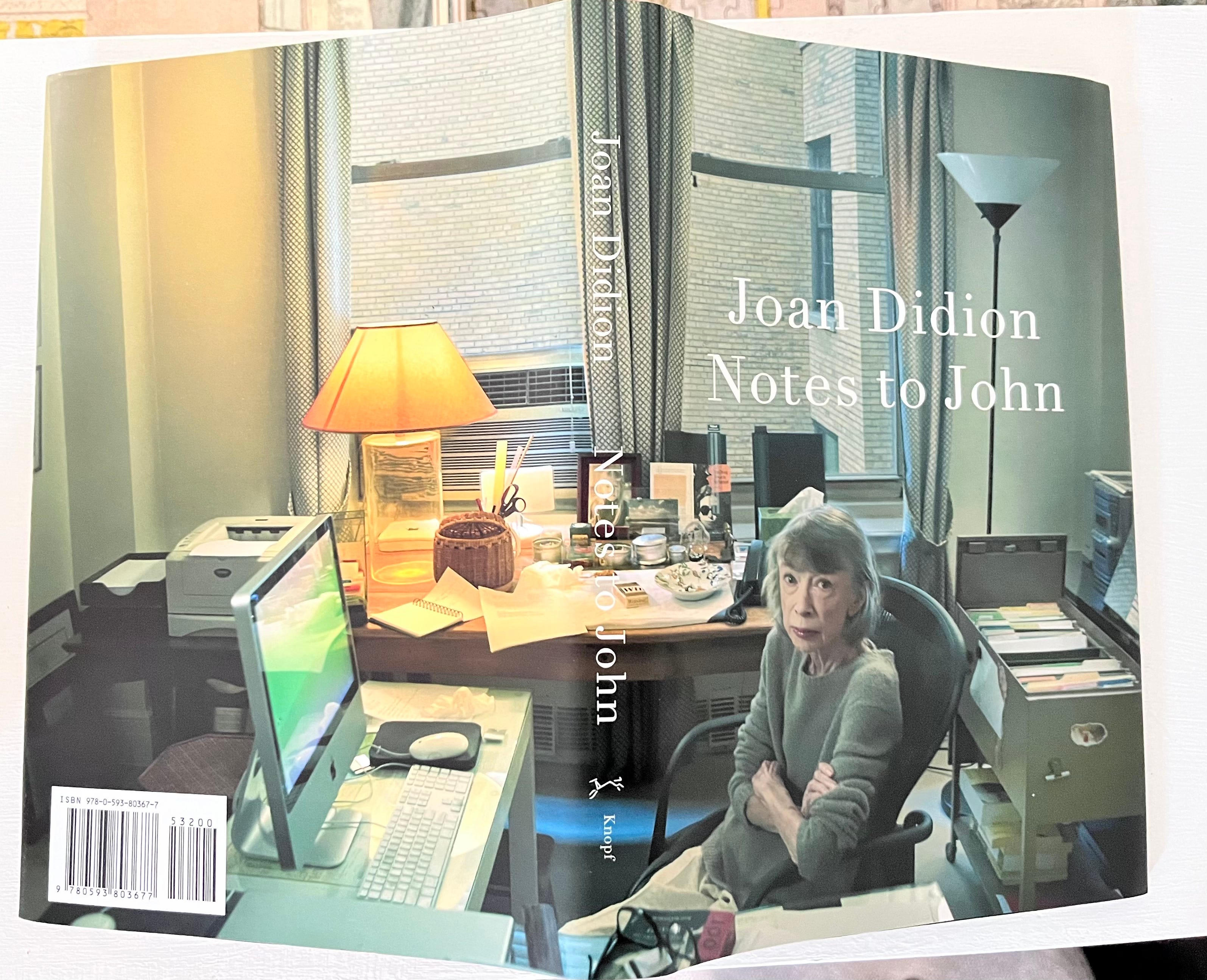
Notes to John consists of approximately a year’s worth of Didion’s recountings of her therapy sessions. She wrote the notes for her husband, John Gregory Dunne, after she began seeing a New York psychiatrist in 1999. Didion sought therapy following a suggestion from her daughter Quintana Dunne’s psychiatrist, who unsurprisingly sensed a wound in the mother-daughter relationship. The notes, as published, start at the tail end of 1999 and go through the spring of 2001 with two additional entries in 2002 and 2003.
I’d heard about the book when it came out last spring, but had no intention of reading it, despite enjoying and admiring Joan Didion’s writing. Didion, who died a little over four years ago, left no instructions to release the notes upon her death. Her husband died suddenly at the end of 2003, and her daughter died tragically in 2005. In the years following their deaths Didion wrote two books about loss and grief: The Year of Magical Thinking and Blue Nights.
None of the central figures, not even the psychiatrist Dr. Roger MacKinnon, in Notes to John are living. Reading about their problems through writings never intended for public consumption, when The Year of Magical Thinking and Blue Nights already exist seemed unnecessarily invasive. A violation of an abstract, unspoken but simple agreement between artist and audience to not demand more than what’s already willingly been given. Most especially if the artist is dead.
But curiosity and a red 50% off sticker got the better of me, and I decided to buy the book.
The first words that appear in Notes to John aren’t Didion’s. In fact, they’re not attributed to any specific person, but I assume they were written by someone at Knopf, the book’s publisher. The mini intro attempts to justify the posthumous release of what the publisher refers to as “Didion’s journal.” In the intro, it’s pointed out that Didion never destroyed the notes. As if that automatically signaled a publishing green light. Although I guess if you’re one of the most read writers of your time, it’s not crazy to assume that any unpublished writing you leave behind could be fair game.
The intro also mentions that Didion and Dunne’s papers have been archived at the New York Public Library with open access, meaning anyone with a New York Public Library card and time to spare could go read them if they so chose. But neither reason offers any reassurance that publishing the notes isn’t at least a little ethically dubious.
Because they’re about talk therapy sessions, the notes include both brief summaries and longer transcription-like descriptions of conversations. As I read, I kept trying to visualize the process. Did she bring a tape recorder to therapy? Was she writing the whole time? How soon after each session did she type up the notes? How did she remember Dr.Mackinnon’s long monologues that run on for several sentences and appear in quotes? And then I’d read something that made me feel like I was the one in therapy, and those process questions would slip away.

In the middle of reading Notes, I revisited Didion’s 1966 essay, On Keeping a Notebook. The essay follows a rhythm where Didion shares a quote or scene or anecdote she’s logged in her notebook and then speculates on why she wrote the note in the first place. That pattern builds until she concludes that ultimately, the notes offer her a way to connect with past versions of herself.
A few lines in particular seemed relevant:
“The impulse to write things down is a peculiarly compulsive one, inexplicable to those who do not share it,”
“The point of my keeping a notebook has never been, nor is it now, to have an accurate factual record of what I have been doing or thinking.”
“ ‘That’s simply not true,’ the members of my family frequently tell me when they come up against my memory of a shared event.”
“I always have trouble distinguishing between what happened and what merely might have happened.”
I’ll acknowledge that the thirty-three-year gap between this essay and the start of Notes to John leaves plenty of time for a person to change. But I think these quotes still provide important context for Notes. They help to explain why a person might write up reports about their therapy sessions. And they validate why a person reading those reports may wonder, did it really happen like that?
If you put accuracy aside and artistic concerns forward, Notes offers a fascinating look into the creative psyche. We all have some loose understanding that trauma, troubles, angst, and pain can inspire art. We all have some awareness of the co-dependent relationship between creation and destruction, some idea that our favorite works of art are the result of real suffering and loss. Notes to John makes those informed inklings explicit.
In her book The Situation and the Story, Vivian Gornick writes, “For Joan Didion, ordinary, everyday anxiety is an organizing principle.” Gornick goes on to say that in her essays, “Didion’s gorgeous nerves are brought under brilliant control.” Zadie Smith shares a similar sentiment in her playful essay, Dance Lessons for Writers. She compares Didion’s writing style to the stage presence of Janet Jackson, Madonna, and Beyoncé, writing, “every sentence of Didion’s says: Obey me! Who runs the world? Girls!”
The qualities that writers and readers accept as elements of Didion’s style are explored in Notes. Didion’s psychiatrist asks her why. Why do you throw yourself into your work? Because working provides stability and meaning. Why do you feel anxious? Historically: a volatile father and an aloof mother, presently: a daughter struggling to adjust to adulthood who self-soothes and self-destructs with alcohol. Why do you obsess over money? Because it represents security.
In the whys, you start to see that creative skills are gifts, yes, but they’re also coping mechanisms and strategies. They’re a way to make a living and a life.
As Didion’s concerns about her daughter intensify, she talks to Dr. Mackinnon about her inability to write. She can’t exert her signature control over those gorgeous nerves. But as her sessions progress, she tells Dr. Mackinnon of moments where the writer’s block lifts and she’s able to work on her book. The book in question here is Where I Was From, a review and disassembly of the stories and myths that define California, her home state.
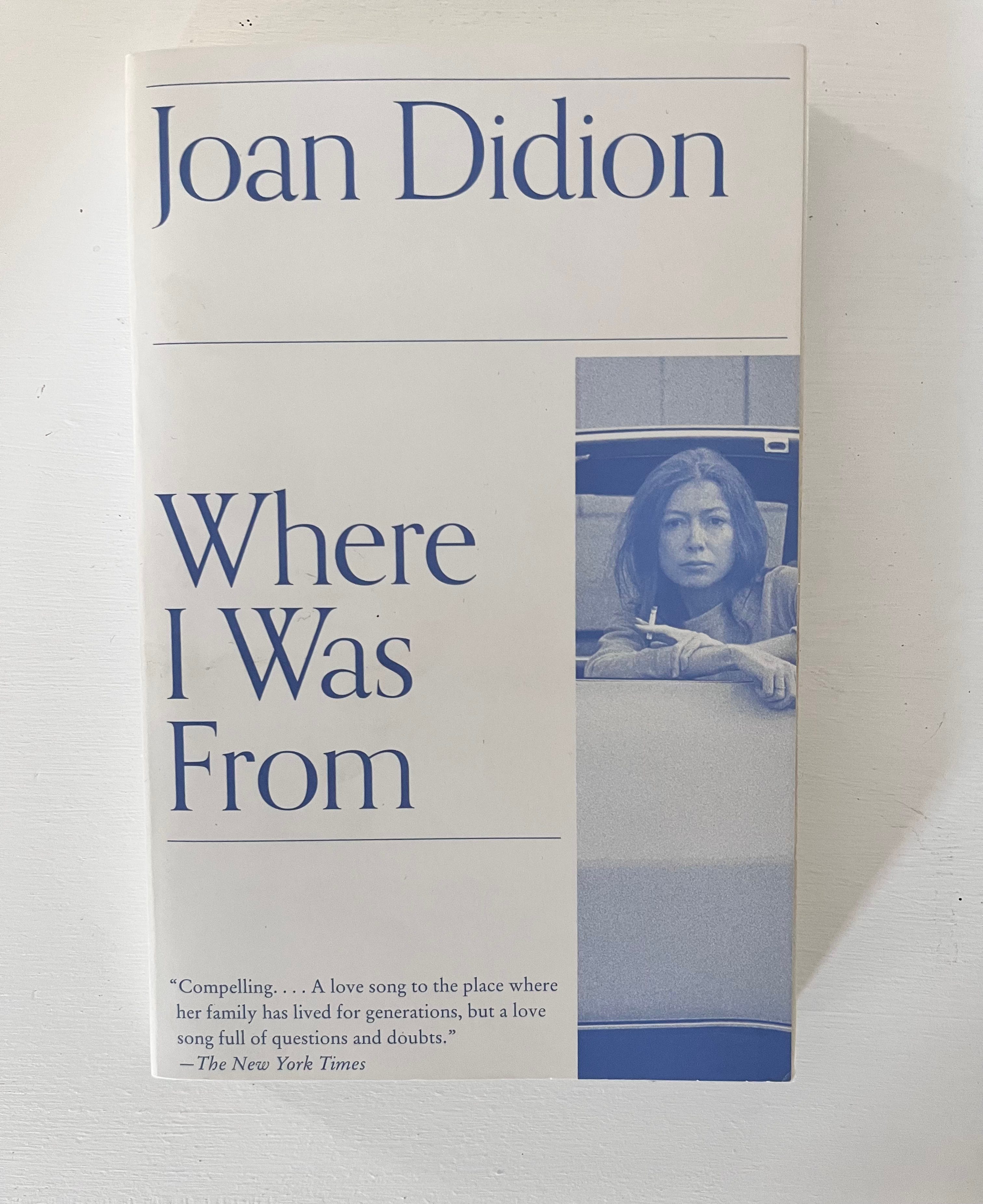
I read Where I Was From after finishing Notes. It starts out slow but builds into a perspective-upending indictment of the forces that gave people the illusion that they could work their way into security and stability. See how she’s taken what she learned with Dr. MacKinnon and applied it broadly.
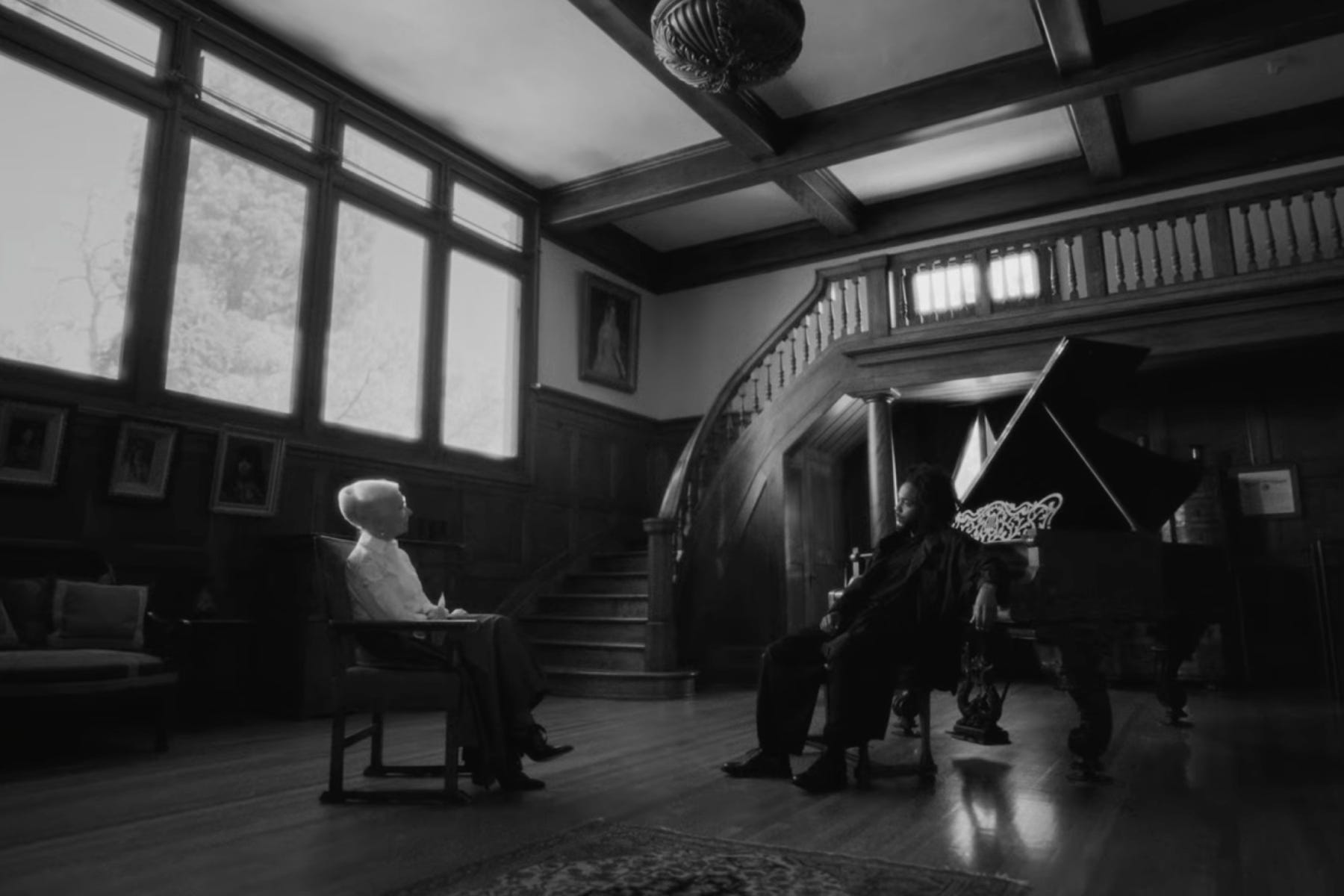
The book reminded me of another work from another child of the Golden State. Where I Was From has the same post-therapy clarity as Kendrick Lamar’s album Mr. Morale & The Big Steppers. Both works interrogate how systems beyond our individual control impact and shape our sense and presentations of self in the world. And they both have an easy confidence that comes from spending time really getting to know yourself.
So I left Barnes & Noble in January, unaware of the Joan Journey that lay ahead and unaware that I’d end up feeling an even deeper admiration for her writing. Reading Notes to John and Where I Was From together plainly illustrated something I think we all intuitively sense about art making. That all great art comes out of those fleeting moments when you can quiet your fears, harness your gifts, and share your anxieties with enough honesty that someone listening might stop asking questions and simply say, I’ve felt that way too.
The Notes, I decided, didn’t need to be accurate, they were true.
THE EXTRAS
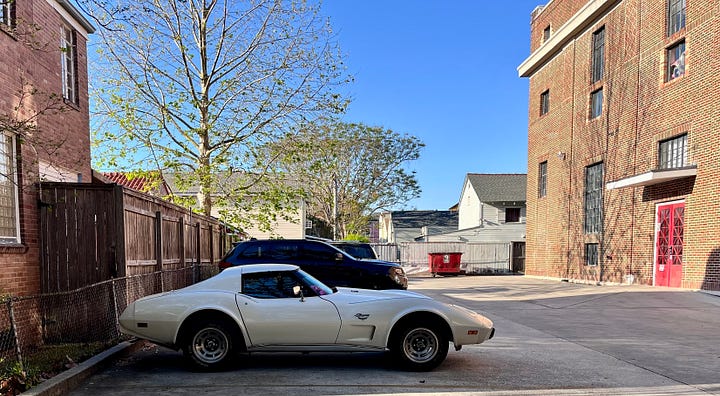
On my evening walk this past Friday, I saw a Corvette Stingray not dissimilar from the one Joan Didion poses with in the photographs Julian Wasser took of her in 1968. I, of course, took this as a sign.
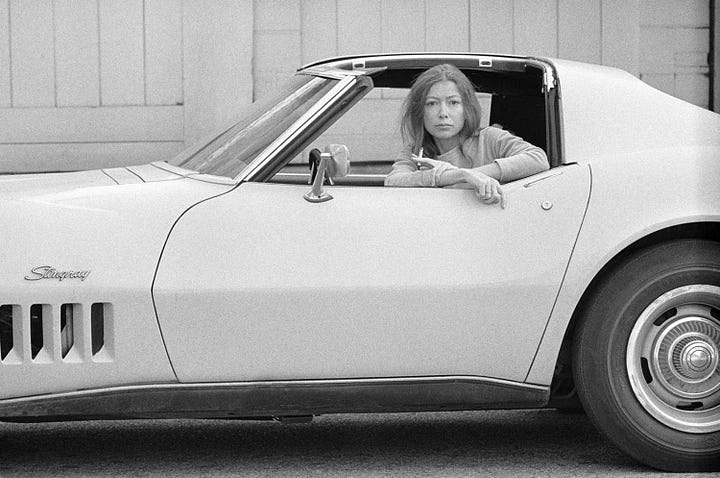
Speaking of Kendrick Lamar, his younger cousin Baby Keem’s recent album Ca$ino encapsulates this idea of trauma being an ingredient in good art. I’m sure having an older cousin at the peak of his artistic powers around to mentor you doesn’t hurt the creative process either. Anyway, Ca$ino is what I was listening to when I saw the Stingray. Another sign naturally.
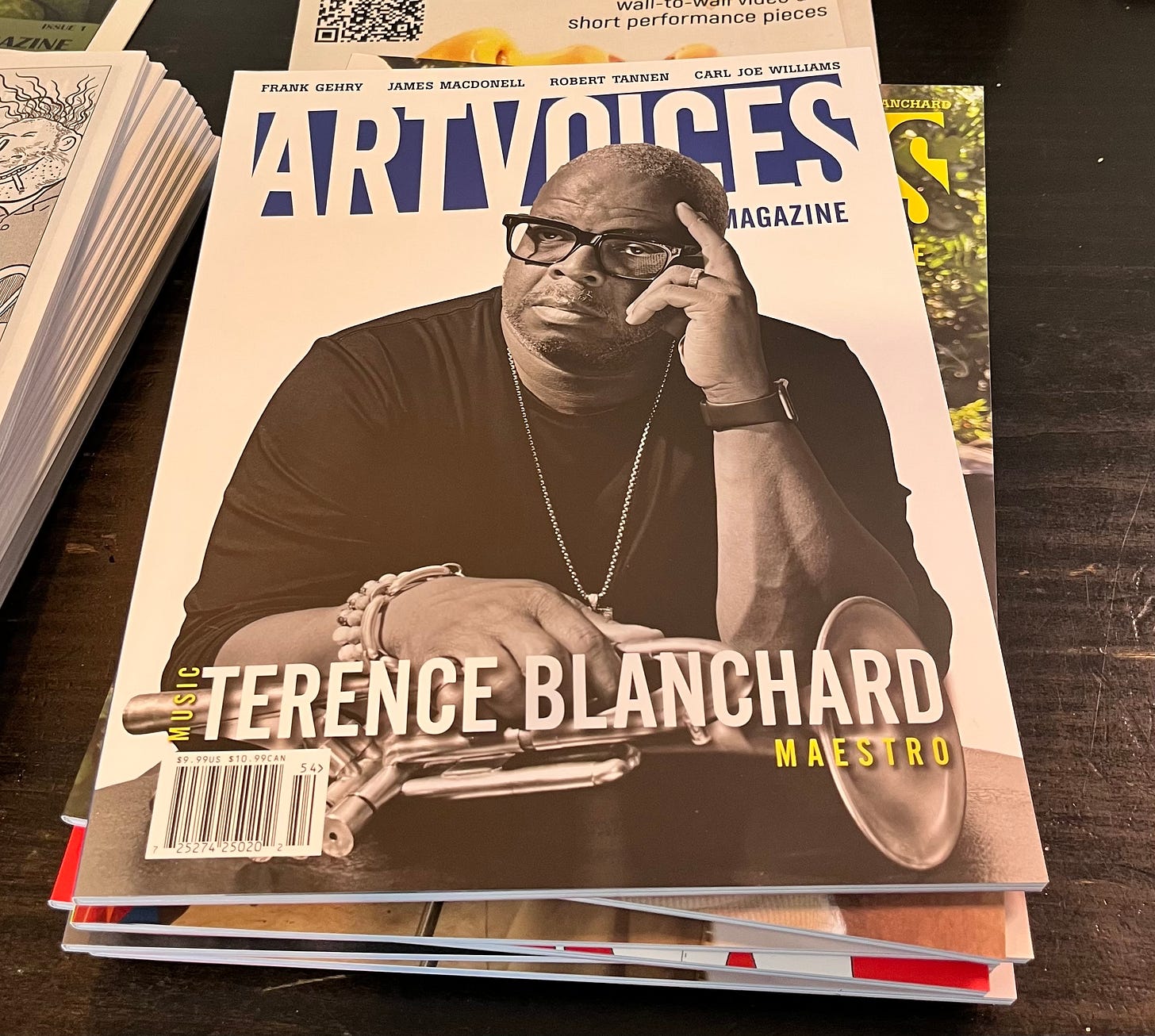
The Winter/Spring issue of the New Orleans based magazine, Art Voices, is out and full of really interesting stories about the local arts community. I interviewed curator Don Marshall for the issue.
Did you watch the Oscars? I struggled with this year’s Best Picture winner, One Battle After Another. I think the film was a little too revealing of the director, Paul Thomas Anderson’s, still-unmanaged anxieties. I appreciated all of Daphne Brooks’s insights about the film’s shortcomings in this podcast conversation. But I do find myself quoting the title all the time, it fits so many situations.


Thanks for reading!